You need more than just enough to open your doors—you need enough to survive.
Let’s be honest:
Most new businesses don’t fail because the idea is bad. They fail because the entrepreneur ran out of time. And in businesS, money buys time.
The Two Most Dangerous Traps
Having too little money.
Thinking you don’t need much money.
Avoid both.
Because when you underestimate what it takes to start, you’re not just underfunded, you’re underprepared.
The Startup Budget
In doing that, that’s where a Startup Budget comes in because you don’t want to guess, you want to know.
A startup budget will help you know. It isn’t just
A shopping list
A “get started” checklist
Or a rough estimate
It’s much more than that. In fact, your Startup Budget is your lifeline for the first critical months.
Your startup budget forces you to:
Itemize every expense (licenses, branding, software, inventory—even the “small stuff”)
Account for ongoing costs (rent, subscriptions, supplies)
Plan for the gap between starting and actually making money
And that gap is where most businesses die.
The Real Formula Most Miss
Most new entrepreneurs overlook the survival period, and that’s a huge reason so many businesses fail before they even get started.
Here’s what most people don’t calculate:
Startup Capital Needed = Startup Period + Survival Period
Reality Check Most People Ignore
Startup Period (Months 0–3)
You’re launching:
Setup costs
Initial investments
Getting visible
Survival Period (Months 4–6)
You’re operating—but not fully profitable yet:
Marketing is ongoing
Sales are inconsistent
Adjustments are constant
This is where your business either stabilizes… or collapses.
Let’s Put This Into Perspective
Even tech startups that raise funding:
Plan for 12–24 months of survival
And when they fail? It’s usually not because they ran out of money, It’s because of poor planning or execution
Here’s the Difference: Tech startups use money to buy time. New entrepreneurs run out of money and lose time
So Let’s Ask the Real Question
If new entrepreneurs knew exactly how much it really costs to start, would it reduce the failure rate?
👉 Yes. Because Instead of jumping in underfunded and hoping it works, most entrepreneurs would:
Delay starting
Prepare properly
Or choose a smarter path
A Practical Roadmap for Your First Year
This is what your first year actually looks like:
1. Startup Period (Months 0–3)
You’re setting up, launching, and getting visible.
2. Survival Period (Months 4–6)
You’re selling—but not consistently profitable. This is where your marketing and demand strategy matters most.
3. Break-Even Period (Months 7–9)
Your revenue starts covering expenses. You’re no longer bleeding—but not thriving yet.
4. Growth / Building Period (Months 10–12)
Now you’re:
Stabilizing
Reinforcing systems
Here’s the Catch:
This roadmap only works If you’re prepared going in. If you’re piecing together random advice:
Pricing feels confusing
Marketing feels inconsistent
Every phase feels like starting over
The NOBOSS Difference
Where most entrepreneurs go wrong, they fail because they run out of time. This tool helps you buy time before you even start.
At NOBOSS, we don’t teach you to “figure it out as you go.” We show you how to:
Plan
Test
Implement
So Months 4–12 don’t feel like survival, they feel like optimization!
The Bigger Picture
Your startup budget is just one piece. But it’s the piece that determines:
How long you can stay in the game
How much pressure you feel
Whether you’re reacting… or executing
Take Action Now
Stop guessing. Start planning. Get the Startup Budget Toolkit and know exactly what it will take to start—and survive—your business. Inside, you’ll get:
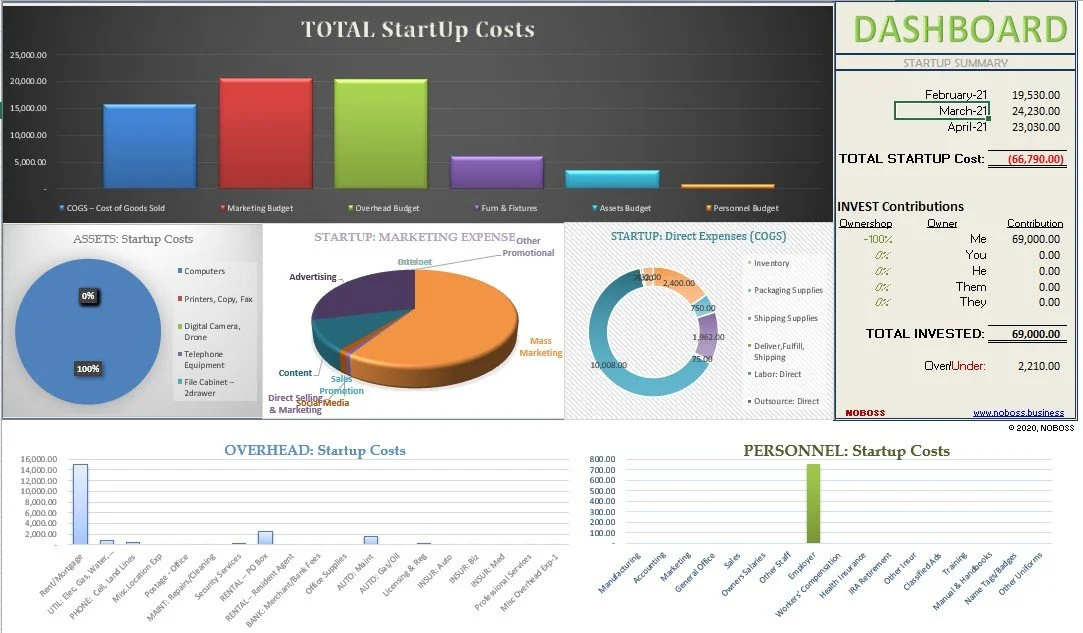
A complete Excel startup budget with a dashboard and built-in calculations
Seven detailed subsidiary budgets that roll into one clear total
A step-by-step video tutorial showing you exactly how to set it up
A PDF guide explaining how to think through your real startup costs
No guesswork. No missing pieces. No surprises.